



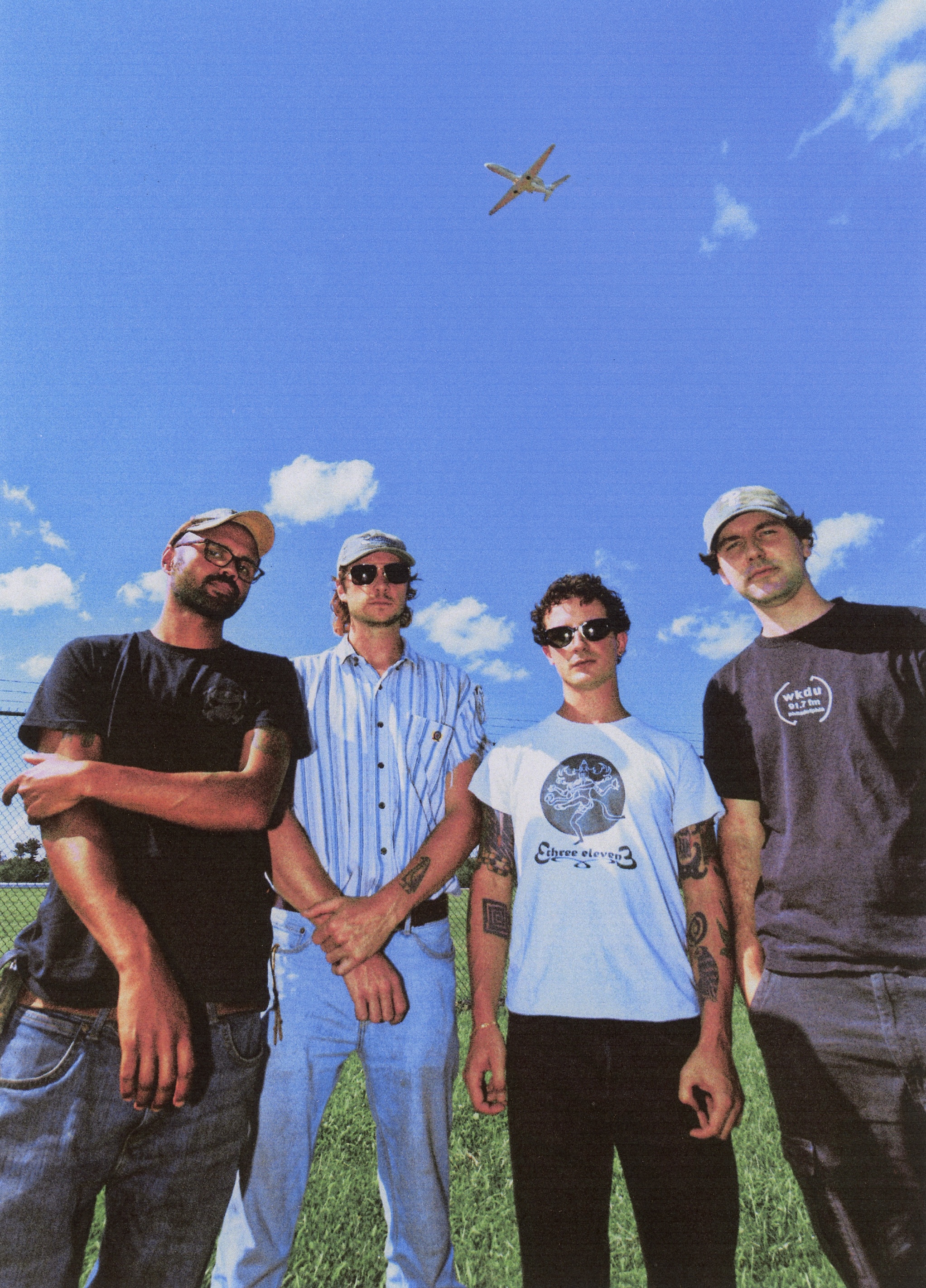
Norweigan trio Hammok blend hardcore with elements of post-punk and experimental indie, giving them a unique sound that feels fresh while keeping emotion at the forefront. The group consists of vocalist/guitarist Tobias Osland, drummer Ferdinand Aasheim, and bassist Ole Benjamin Thomassen. Throughout their latest album, When Does This Place Become Our Scene, there are plenty of moments of heavy catharsis and screeching vocals, balanced by stretches of reprieve and introspective lyricism.
“The Scene” opens up the album asking the questions, “When does a space become a scene?” and “When does this place become our scene?” implying that there can be some gatekeeping and restrictions to letting a new scene naturally form when the community is working hard to make one happen. Norway is known for its punk and metal culture and in Oslo especially, there is a tight-knit DIY community and a slew of independent venues where it is cultivated. This song could be a jab at the current state of the community there in Oslo, and an even deeper question as to what type of scene they even want to form.
This topic recurs throughout the album and I think it touches on where the hardcore and other scenes are at on a more global scale. Later in the album, track “When The Kids Are Too Old to Cause a Scene” continues on this thought; when do you outgrow a scene, and when is it time to pass the torch on to the next generation who can actually create a scene for themselves.
Other songs like “Gooning for Free” and “Blast Off (Blast Off) Blast Off” “subtly point to other potential parts of the problem with stagnating cultural scenes. Hammok seems to be very dialed in with the current state of society and all of the things driving it to where it is: internet culture and never-ending wars all fuel a sense of empty purpose, and younger generations specifically are feeling this paradigm shift.
Another standout track on the album “Tap Water” is a clear example of Hammok’s ability to execute the aforementioned push-and-pull pattern, starting with a more post-punk feel before descending into heavier moments of chaos. The chaos is then met with a sobering thought in the lyric: “How can I set myself on fire if nothing is sacred anymore?” Hammok then switch out the word “sacred” with “painful” further implying that the fire that keeps a scene alive and going may not even be able to ignite if there is no real community, or shared drive left to fuel it.
“Confidence of a Beaten Horse” pokes fun at the concept of confidence, calling it an overrated fad. It also calls out bands and people who overly rely on “metrics” to evaluate their self-worth, knowing that deep down these numbers are virtually meaningless. The track exposes how fragile that kind of manufactured validation really is, especially when it replaces genuine self-reflection.
When Does This Place Become Our Scene captures a band wrestling with the state of their community while refusing to let cynicism take over. Hammok channel that tension into a record that’s as emotionally volatile as it is thoughtfully constructed, pushing their hardcore sound into new spaces that feel reflective while upholding urgency and emotion. The album not only critiques the fractures within modern scenes but also makes the notion that they need something to collectively fight for, and that something might only exist if people are willing to build it together.

Leave a Reply